Need Help? Contact Us at 1.866.923.1544

For those who have health insurance just as much as those who don't: you've probably already seen some of the [often cost-oriented] changes brought about by the implementation of Obamacare, and believe it or not, more and more changes are going to continue to roll out throughout 2013. From tax increases to Medicaid payments, sometimes we don't realize just how much these amendments are going to affect us until they're in full-swing. Couple that with the fact that health insurance premiums rise every year, and you've got the perfect recipe for throwing your family finances off-track with just one trip to the hospital.


View More

medihoney wound dressing

You may be lying in the sun, or you could be cooking dinner, no matter where you receive one, burns are a common but very painful injury.  Everyone is confronted with a minor burn on a daily basis, so it is good to know how to properly treat a first and second degree burn.  But keep in mind that there is a huge difference between a first degree burn and fourth degree burn.  A major degree burn may require medical attention to prevent infection and to also ease the severity of the burn.  Before treating a burn at home you should first determine what kind of –degree—burn you have suffered.  If the burn is a first or second degree burn follow these four steps below:

View More

dermabond

Most adults know that cuts and scrapes are all a part of life.  While many types of wounds can damage the skin including abrasions and lacerations, ordinarily small cuts and scrapes do not require a visit to the hospital and can be treated properly at home.  Unfortunately, minor cuts and scratches can be extremely painful and if not cleaned properly, could cause an infection.   Follow these five simple steps when cleaning a cut or scrape:

View More

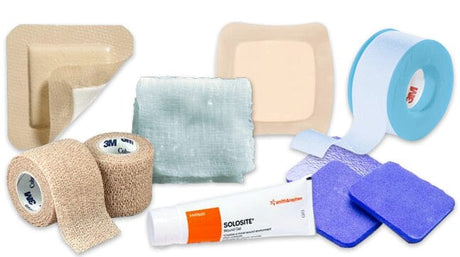
Patients dealing with pressure ulcers and other exuding wounds can rely on Mepilex Border Dressings to retain exudates in a soft, moist environment. Whether the injury is the result of a traumatic incident or a surgery, this all-in-one dressing is ideal. 

295xxx-mepilexborder-78714-std.gif

Created from a triple layer of foam, nonwoven fabrics, and superabsorbent fibers, Mepilex Border Dressings provide a superior product for controlling exuding wounds in a clean and healing environment. The dressing holds the exudates within the borders to prevent a spread into the uninfected skin surrounding the wound and causing maceration. In addition to this technology designed to control the exudates, Mepilex Border manages to maintain a moist environment that cultivates healing. 

Post-operative wounds can foster painful blisters that increase the risk of infection to an already vulnerable cut. Mepilex Border surrounds the wound, sealing the edges and thereby decreasing the risk of maceration and other post-operative complications that can lead to additional discomfort and healing time. This wound-covering system features a bacteria and virus barrier that protects the patient from dangerous infections and painful blisters. Multiple sizes are available to swathe post-op wounds of all sizes and depths, effectively minimizing potentially dangerous complications. 

In addition to surgical incisions, Mepilex Border Dressings are also appropriate for traumatic wounds to the skin such as tears and burns. The bacteria barrier not only protects the wound from treacherous infections, it also creates a soft, comfortable edge that rests on inflamed and painfully sore skin. Patients wearing Mepilex Border maintain a moist environment under the dressings, preventing the material from adhering directly to the wound. The soft silicone of this contact layer provides comfort to patients already dealing with the stress and anxiety of their medical situation. 

The soft, comfortable surrounding layer allows patients ease and peace of mind when facing what can often be uncomfortable and painful dressing changes. The silicone, while adhesive and controlling of exudates on the skin, gently pulls away from the skin without ripping or tearing the material or the patient’s delicate wounds. This makes Mepilex Border extremely easy to reposition or remove with little time, effort, or patient discomfort. Additionally, these dressings do not leave behind a sticky residue to be scrubbed or cleaned away, nor is there any odor trapped under the triple layers of absorbent foam. 

The benefits of this easy-to-adjust product are numerous. Chronic wound sufferers dealing with pressure ulcers or diabetic wounds can profit from this comfortable technology. Low-exuding wounds with minimal chance of infection allow dressings to be kept in place for several days without changing them. The soft edges, however, also encourage Mepilex wearers to remove and replace the dressings in faultless relief as frequently as necessary to assess the condition of the wound. Having the ability to change Mepilex Border Dressings more infrequently lowers the cost of medical equipment and dressing changes for the patient and the medical facility supplying the dressings. 

At this time, there are no particular contraindications for Mepilex Border Dressings in a proper medical environment. Although best used on non-infected wounds, there is no reason that they cannot be applied to potentially infected incisions and tears provided that antimicrobial therapy is included in the treatment plan. All skin that is part of the wound and near the wound should be thoroughly cleansed and dried prior to application of Mepilex Border, and no other fixation of the dressing should be necessary. These individually wrapped dressings are available in multiple sizes appropriate for wounds and incisions of all sizes and shapes. 

View More

When people experience external injuries, they commonly have scarring afterwards as part of the healing process. In each case, a number of factors determine the characteristics of the scar that forms, including the severity and type of the injury and its location on the body. Patients' injuries optimally become flat, skin-colored scars that disappear with time.


Unfortunately, this isn't what happens for many patients, who receive raised red scars that are unsightly as well as painful. These scars are classified as keloid and hypertrophic types. Keloid scars result from excess buildup of collagen at the site of the injury and can become significantly larger than the wound that caused them to form. Hypertrophic scarring also results in a raised red area but does not grow larger than the injured area, because it lacks the excess collagen that characterizes keloid scarring. 

Recent advancements in scar reduction technology have made an effective new treatment available for patients who want to reduce their new or old keloid and hypertrophic scars. This new product, known as Cica-Care, consists of an adhesive gel sheet covered with a novel form of silicone. Medical tests have found this new technology to reduce unsightly scars by flattening, fading and softening them in up to 90 percent of cases tested. 

View More